Bathroom Remodel Cost in South Jersey: What to Know
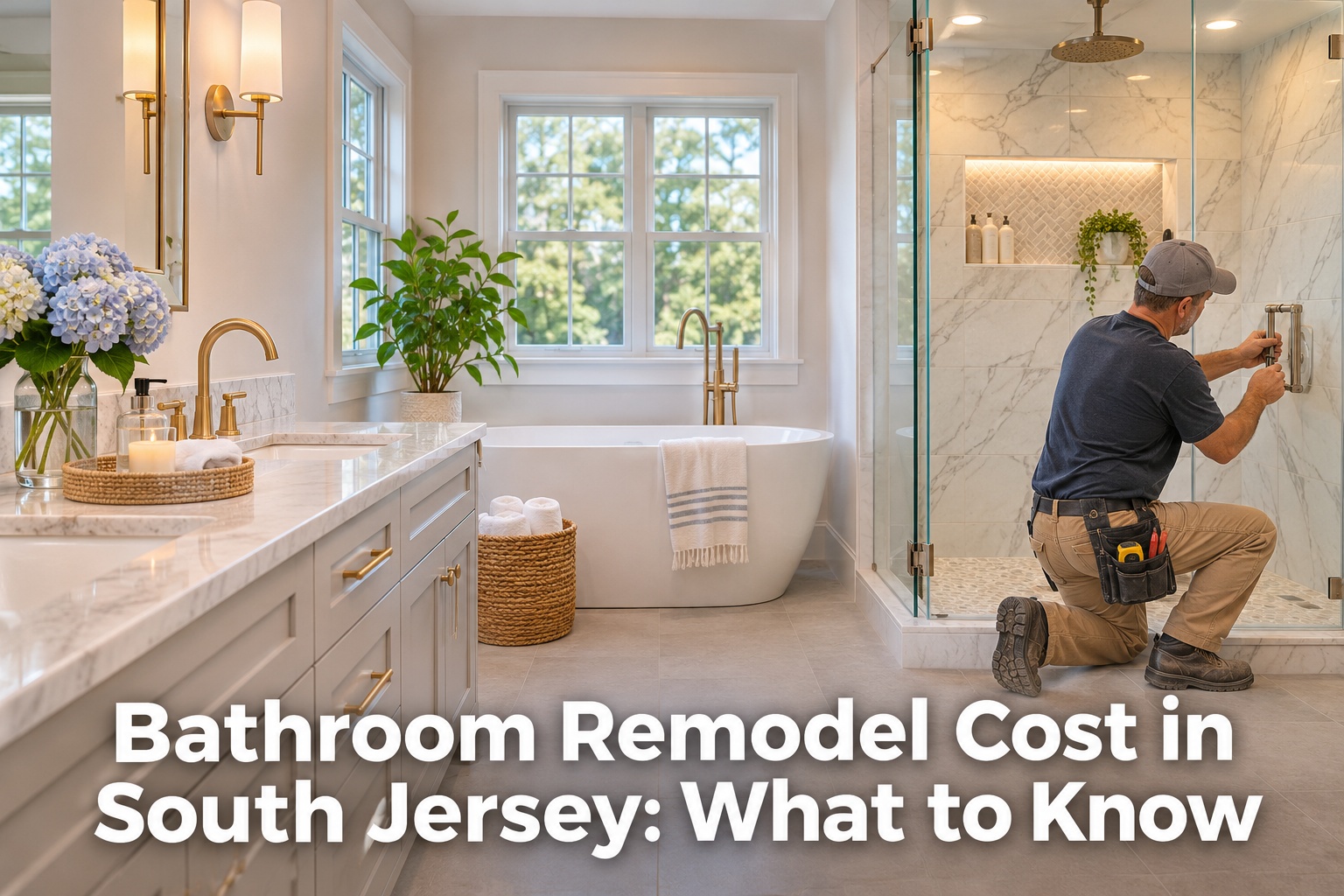
Build With Konstructit is a women owned, licensed design/build general contractor in Pleasantville (NJ HIC #13VH13697200) with over 30 years of experience. Homeowners ask us about bathroom remodel cost in South Jersey more than almost any other question, and they deserve a straight answer.
This page prints no dollar figures, and that is deliberate. No honest universal average exists for a bathroom remodel in this part of the state. Cost depends on scope, layout, materials, and what is hiding behind the walls, and a number printed on a web page would be wrong for most real jobs.
What we can do is explain what moves the number up or down. You will see where permits and inspections fit into a bathroom remodel South Jersey budget, how the work plays out in different towns, and how a fixed written quote after design settles the question. If you are comparing a bathroom remodeling contractor South Jersey homeowners can rely on, this is the framework we would use.
| Cost Factor | Lower Impact | Higher Impact |
|---|---|---|
| Layout | Fixtures stay in place | Toilet, tub, or shower relocated |
| Materials | Entry level selections | Premium tile, stone, custom glass |
| Code work | Cosmetic updates | New circuits, waterproofing, venting |
| Behind the walls | Sound framing and pipes | Rot, outdated wiring, hidden damage |
What Drives Bathroom Remodel Cost in South Jersey
Three levers do most of the work: scope, materials, and code-required work. Scope is how much you change. Materials are what you choose to finish it with. Code work is everything the building code and your local construction office require, no matter how simple or fancy the finish.
The single best predictor of how a project is priced is where it falls on the line between cosmetic and regulated work. Swapping a vanity in the same spot is one kind of job. Moving plumbing, adding circuits, or opening a wall is another kind entirely, with more trades, more inspections, and more paperwork.
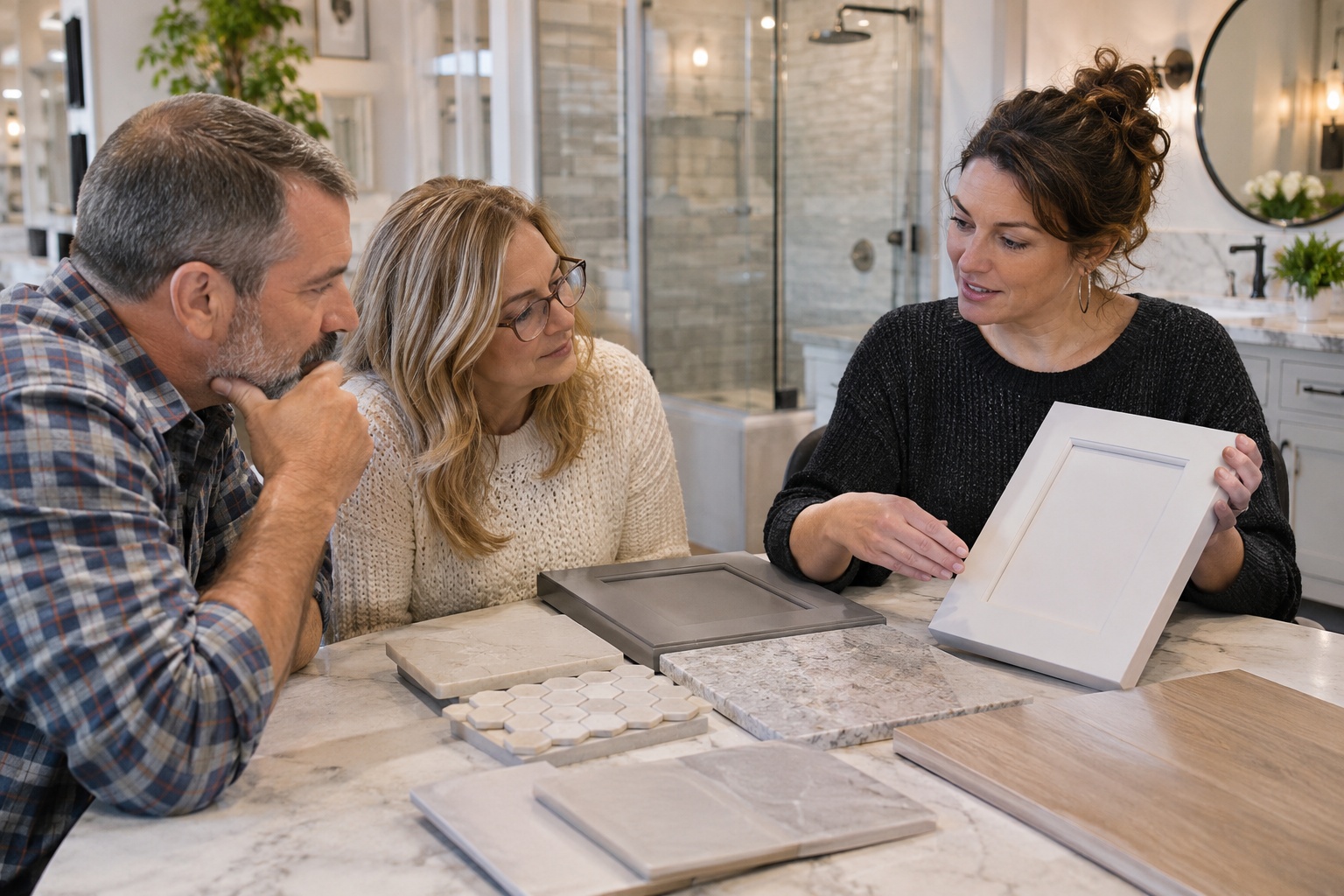
Our in-house design studio and showroom on the Black Horse Pike in Pleasantville exists for this reason. Settling your choices before pricing means the quote reflects real selections, not guesses.
Scope and Layout Changes
Replacing fixtures where they already sit is the most contained kind of bathroom project. Moving a toilet, shower, or tub costs more, and the reason is simple: the pipes, the framing, and often the floor have to change with it.
Here is what typically pushes a layout change higher:
- Converting a tub to a walk-in shower, which changes plumbing, waterproofing, and framing
- Adding or removing walls to reshape the room
- Enlarging a doorway or window opening
- Adding circuits for new lighting, heated floors, or a vanity with more outlets
Every one of those means more labor and usually more than one trade. Moved plumbing and added circuits also mean more inspections, which affects the schedule as well as the budget.
Fixed plumbing stacks add another constraint in high rise buildings and rowhomes. We cover that in the local sections below.
Materials, Fixtures and Finish Level
Finish level is where homeowners have the most control. Tile, vanities, glass, fixtures, and flooring each come in entry level, mid range, and premium tiers, and the gap between tiers is wide. A premium tile with a complex pattern costs more to buy and more to install than a standard field tile.
Cabinetry is a good example. Our sister company, Cabinets Direct Wholesalers, shares our building, so you can see vanity options in person. Stone for countertops and shower surrounds comes through Rye Marble & Granite, also in the same building.
Builder grade versus custom is the biggest swing. Making showroom selections before the quote prevents allowance surprises, where a placeholder number for tile or fixtures turns out to be far below what you actually want. When the selections are made first, the quote reflects the bathroom you will actually get.
Code-Driven Line Items That Add to the Budget
Some costs exist regardless of finish level, because the building code requires them. Homeowners sometimes read these as upsells. They are not.
- Electrical: Bathrooms require GFCI protection, and AFCI requirements may apply to certain circuits. Adding outlets, switches, or fixtures generally requires an electrical permit.
- Shower waterproofing: The code (IRC R702.4) governs backing and waterproofing behind tile in wet areas. Done properly, it protects your framing for decades.
- Ventilation: An exhaust fan removes moisture that otherwise feeds mold and peeling paint.
- Toilets: Replacement toilets in New Jersey must use no more than 1.6 gallons per flush.
- Shower valves: Shower and combination tub-shower valves must be pressure-balance type to help prevent accidental scalding.
These items show up on every honest quote, whether the bathroom is basic or high end. A contractor who leaves them out is not giving you a lower price. They are giving you an incomplete one.
Permits, Inspections and Your Remodel Budget
Permits and inspections belong in the budget from day one. Treating them as an afterthought leads to stalled projects and awkward conversations with the local construction office.
New Jersey municipalities administer bathroom remodel permits differently. Requirements, forms, and fees vary from town to town, so confirm the details with your local construction office before work begins. One town’s rules are not a regional standard.
Because we handle design and construction under one team, permit coordination is part of how we work. The drawings that support the permit come out of the design process, and the same people schedule inspections as the job moves along.
When a Permit Is Needed and When It Is Not
The dividing line is simple in principle. Replacing a toilet, bathroom sink, tub, or similar fixture without changing the pipe arrangement may qualify as ordinary repair. Relocating fixtures or altering plumbing generally requires a permit.
Other triggers include:
- Adding electrical fixtures, outlets, switches, or wiring generally requires an electrical permit
- Removing or adding walls can trigger a building permit
- Changing structural floors or ceilings can trigger a building permit
- Enlarging openings can trigger a building permit
Now the common question: do you need a permit to replace a vanity and faucet in the same spot? Usually that sits on the repair side of the line. It depends on keeping the existing pipe arrangement and avoiding other regulated work. If the new vanity needs a moved drain or a new outlet, the answer changes.
Not every remodel requires a permit, and not every fixture swap is exempt. The exemption hinges on what you actually touch. When in doubt, a quick call to the local construction office settles it before the work begins.
Minor Work Permits, Full Permits and Plan Review Timing
New Jersey has a minor work permit that allows work to begin before the permit is issued. It suits smaller scopes. Larger projects, such as ones involving structural changes or significant plumbing and electrical, go through the full construction permit process.
A bathroom permit application may require building, electrical, and plumbing subcode sections, plus before-and-after drawings. That is one more reason design comes first. Drawings need to exist before the application can be completed.
Plan review timing varies by municipality. We will not invent a timeline here, because it would be wrong for some towns. Confirm review times with your local office and build that time into the schedule, so tile and cabinets are not sitting in a garage waiting on paperwork.
Inspections and Fees
The typical inspection sequence follows the work. Rough plumbing and electrical inspections happen before the walls close. A final inspection happens at completion.
Timing matters to the schedule. If walls are closed before the rough inspection, they may have to be reopened. If tile crews are booked before the inspector can visit, the whole job waits.
Permit fees exist and vary by municipality. We do not print figures here, because they differ from town to town.
What Happens When Work Is Done Without a Permit
Skipping a required permit can cause real trouble. Possible consequences include:
- Stop-work orders that halt the job midstream
- Fines from the municipality
- Retroactive inspections, which may mean opening finished walls
- Problems at sale, when a buyer’s inspector flags unpermitted work
- Questions from your insurance company after a claim
These are possibilities, not guarantees, but they are common enough to take seriously.
If your bathroom was already done without a permit, do not panic. Talk to a licensed contractor and your local construction office about how to legalize the work. It is easier to resolve before a sale than during one.
Who Can Do the Work: Homeowner vs. Licensed Contractor
Owner-builder questions come up often. What a homeowner is allowed to do varies, and plumbing and electrical work often require licensed trades. Confirm with your local construction office rather than assuming.
A licensed general contractor matters for practical reasons. You get one accountable team, permits pulled correctly, and inspections scheduled in the right order. If something goes wrong, there is a single point of responsibility.
Build With Konstructit is the licensed contractor, and we do the construction ourselves. Design and construction sit under one team, backed by over 30 years of experience. That means the person who designed your shower is in the same building as the people who build it.
How Bathroom Remodels Play Out Across Our South Jersey Service Area
A bathroom remodel looks different depending on the house. The era, the framing, and the layout shape the work more than the zip code does.
We work across Pleasantville, Absecon Island, the mainland, the Pinelands towns, and Cape May County. Whether it is a bathroom remodel Margate NJ homeowners want, a bathroom remodel in Brigantine or Ventnor, or work in Egg Harbor Township, the first conversation is always about the house itself.
Our Northfield and Margate pages go deeper on those towns.
Mainland Homes: Northfield, Absecon, Egg Harbor Township and Linwood
Bathroom remodeling Northfield homeowners ask about usually involves mid-century ranches, capes, and splits. Absecon has plenty of the same stock. These homes often have compact bathrooms where a thoughtful layout gains more than extra space ever could.
Egg Harbor Township is full of 1980s to 2000s colonials. Many have thin cabinet boxes and plastic shower pans that owners eventually replace with properly waterproofed showers.
Linwood colonials often bring larger floor plans. Linwood and Northfield both sit outside the coastal flood zones, which keeps those renovations simpler on the regulatory side.
Shore Towns and Barrier Islands
Atlantic City, Ventnor, Margate, Longport, Brigantine, and Ocean City are mapped coastal flood zones. A renovation past the substantial improvement threshold can require the house to meet current elevation. A bathroom inside a larger renovation should be scoped with that in mind.
Raised homes change the logistics. Cabinetry and stone go up a flight of stairs, and ground level enclosures are limited. While walls are open, it makes sense to raise water heaters and panels.
Atlantic City high rises bring freight elevator schedules, dust and noise rules, and fixed plumbing stacks. Chelsea rowhomes are narrow. In rental towns like Ocean City and the Wildwoods, the season sets the clock: design late summer, order in fall, build through winter.
Older Homes, Pinelands Towns and Septic
Older houses in Pleasantville, Egg Harbor City, and Ventnor (think 1920s foursquares) often hide balloon framing, plaster walls, and knob and tube wiring remnants. Those are exactly the conditions that change a budget once walls open.
In Pinelands towns such as Galloway, Hamilton, Hammonton, and Mullica, Pinelands Commission review applies to additions and new homes, not interior remodels. Adding a bathroom is different, though. Well and septic capacity need to be checked before a new bathroom goes in.
In Cape May, the Historic Preservation Commission reviews exterior work only, so an interior bathroom remodel in a Victorian is generally not part of that review.
Hidden Conditions That Change the Budget Mid-Project
Walls hide things. Mold, rot, structural damage, outdated wiring, and failed waterproofing are the usual suspects, and none of them are visible until demolition.
When something turns up, it has to be fixed properly. Building a new shower over rotted framing only hides the problem. That unplanned repair is the most common reason a final bill moves.
Older homes carry more of this risk. Plan for the possibility, and ask any contractor how they handle discoveries. A written process for change work, agreed in advance, keeps surprises from becoming disputes.
Lead Paint in Pre-1978 Homes
Homes built before 1978 may contain lead paint. Lead-safe compliance can add testing and containment to a remodel, which is real work with real cost.
Many South Jersey houses fall into that era, particularly the older stock in Pleasantville, Egg Harbor City, and Ventnor. We raise the question early so it is part of the plan rather than a mid-job interruption.
Energy-Saving Fixtures and South Jersey Gas Programs
South Jersey Gas lists discounted energy-saving water fixtures through its marketplace, and it advertises rebates for qualifying high-efficiency heating and water-heating equipment.
Eligibility, equipment requirements, rebate amounts, and program availability must be confirmed with the utility. We cannot promise that a rebate will apply to your specific bathroom project. Still, it is worth checking before you finalize fixtures or a new water heater.
How a Fixed Written Quote Keeps the Cost Clear
Our process starts with design. Once the layout, materials, and scope are settled, we put everything into a fixed written quote. That quote reflects the actual space, your actual selections, and the code work the project requires.
This is why we do not publish a price list. A figure on a web page cannot account for your plumbing, your framing, or your tile. A written quote can.
It also itemizes permit and inspection coordination, so the regulatory side is visible. The goal is no surprises, and a fixed quote after design is the clearest way to get there.
Final Thoughts
Bathroom remodel cost in South Jersey comes down to a handful of decisions: how much you change, what you choose, and what the code and the house require. The cosmetic-versus-regulated line shapes everything else.
Permits, inspections, and hidden conditions are part of the real budget. So are older-home surprises like lead paint and outdated wiring. A contractor who explains these upfront is protecting you.
That path gives you a bathroom built to code, built to last, and priced for your actual space.
Thinking about your own project? Call Build With Konstructit at (267) 980-0337 or schedule a free consultation at our design studio.
Frequently Asked Questions
How much does a bathroom remodel cost in South Jersey?
It depends on scope, layout, materials, and what is behind the walls. No verified universal average exists, so we do not print one. Moving plumbing, upgrading finishes, and fixing hidden damage all push costs up.
Do I need a permit to remodel my bathroom in South Jersey?
Not always, but often. Replacing a fixture without changing the pipe arrangement may qualify as ordinary repair. Relocating fixtures, altering plumbing, adding electrical work, or changing walls and openings generally requires a permit. Municipalities administer permits differently, so confirm with your local construction office first.
How much more does it cost to move a toilet or shower?
Moving either one costs noticeably more than replacing it in place. The drain, supply lines, and often the floor framing have to change, which adds labor, trades, and inspections. A tub-to-shower conversion adds waterproofing work too. Your design and free written quote will show exactly how much the move adds.
Is it cheaper to remodel a bathroom or build a new one?
Remodeling an existing bathroom is usually less involved than adding one, because the plumbing and framing are already there. Adding a new bathroom means new supply and drain lines, and on a septic or well property, a capacity check. For a Pinelands home, that check comes first.